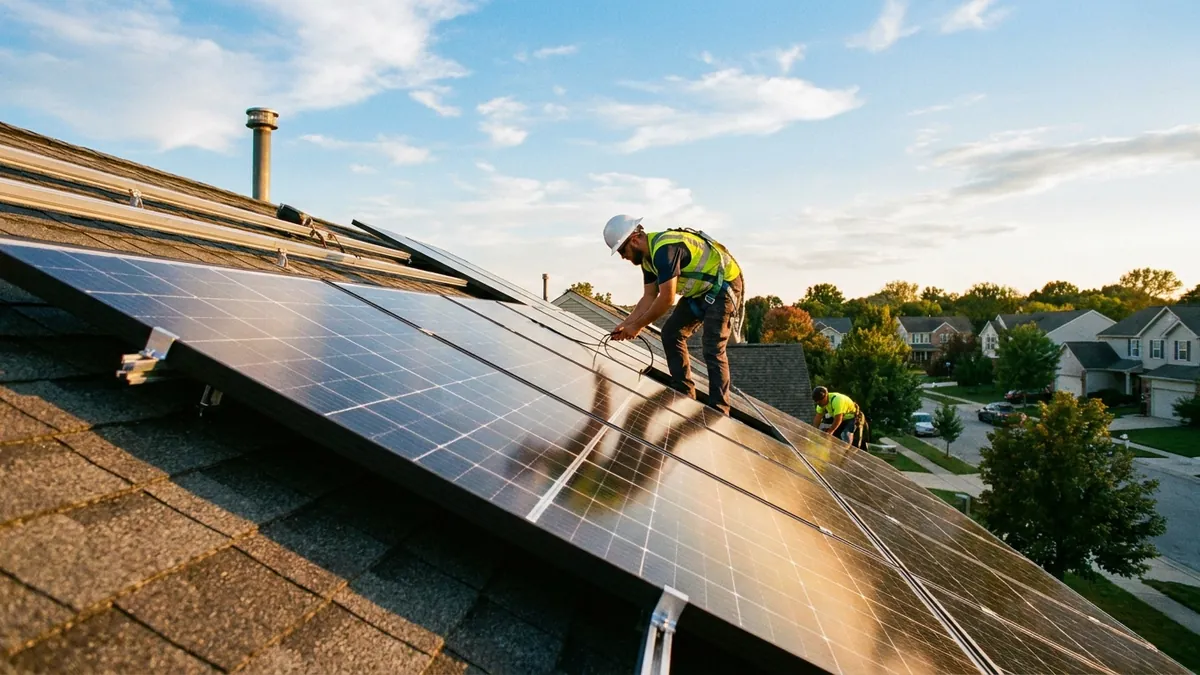
Caribbean nearshore solar qualifiers screen inbound marketplace leads against your installer's qualification rubric (homeownership, credit pre-qual range, roof and shading, install timeline, utility bill range), then warm-transfer qualified prospects to your closer. Native English. US business hours and evening windows. Sub-60-second speed-to-lead routing where the marketplace requires it. $12 to $18 per hour all-inclusive in 2026, roughly half of US-based qualifier cost.
Why Caribbean Nearshore for Solar Lead Qualification
Residential solar economics depend on lead efficiency (the full picture for installers is on our page for solar EPC teams). The cost of a marketplace or aggregator lead is fixed before the call ever happens. What separates installers that scale from installers that burn cash is the quality of qualification on the inbound call: the right disqualifications happen fast, the right prospects warm-transfer to the closer, and the SLA on speed-to-lead holds during the windows when residential prospects actually pick up the phone.
Caribbean nearshore fits residential solar qualification specifically:
- Native-English conversation quality. Residential homeowners talking about a $15,000 to $40,000 install do not engage on a call where the agent's accent introduces friction. Jamaica, St Lucia, Trinidad, and the rest of the English-speaking Caribbean are native-English markets. Prospects hear a US-style conversation, which keeps the call live long enough to qualify.
- US Eastern Time year-round. The region runs on EST equivalents. That covers prime residential windows (lunch hour, evening 5pm to 9pm Eastern) where solar leads convert. Far-offshore alternatives operate at the edges of those windows or run shifts that misalign with prospect availability.
- 40 to 55 percent cost reduction. Caribbean qualifiers run $12 to $18 per hour all-inclusive against US qualifier costs of $25 to $38 per hour fully loaded. That gap improves the unit economics on every lead processed without compressing conversation quality.
- Mature BPO talent pool. Caribbean BPO has 20-plus years of regulated voice experience. Agents with prior qualification, financial services, or sales support experience are recruitable for solar programs without starting from zero.
- Same time zone, same cultural reference points. Caribbean agents grow up consuming US media. The conversational pace and trust-building moves that work on US homeowners land naturally without lengthy cultural training.
For broader cost framing, see our call center outsourcing cost guide. For a Caribbean and Latin American provider landscape, see our best nearshore call center companies roundup.
The Solar Qualification Flow
Every CFG solar qualification program runs a defined screening flow on every inbound or outbound conversation. The exact rubric is configured to your installer's thresholds, but the structure is consistent:
- Homeowner verification. Renters and HOA-restricted properties are typically out. The agent confirms ownership and property type early so disqualifications happen in the first 60 seconds rather than at minute 8.
- Credit pre-qualification. A soft credit pre-qualification range is captured against your installer or financing partner's threshold. The agent works to your scripted disclosure language. Prospects below threshold disposition out cleanly with reason codes.
- Roof orientation, age, and shading. Obvious disqualifiers (north-facing only, heavily shaded, roof past replacement age) are flagged on the call. The agent does not run a design assessment; that work stays with your design team. The qualification call simply screens out roofs that no installer would quote.
- Utility bill range. Average monthly utility bill is captured to size the system economics and disqualify prospects below the bill threshold where solar economics do not work.
- Install timeline. Now, 1 to 3 months, 3 to 6 months, just researching. Just-researching leads can be nurtured rather than transferred. Active timelines warm-transfer.
- Decision-maker availability. If the spouse or co-decision-maker is required for the closer's pitch, the agent confirms availability and books the appointment for a window when both can be on the call.
- Live transfer to closer. Qualified leads warm-transfer directly to your closer or installer rep. The agent stays on the line for the introduction, confirms the close team has the lead detail, and disconnects after the handoff.
Disqualified leads are dispositioned with reason codes that flow back to the lead marketplace and your in-house lead scoring model.
Speed-to-Lead and SLA Execution
Lead marketplaces and aggregators sell leads with strict speed-to-lead expectations, often under 60 seconds from form submit to first dial. Conversion rate compression is steep when the first dial happens at 5 minutes versus 30 seconds.
CFG's lead distribution layer routes inbound leads to available agents via dialer or CRM webhook within the SLA window. The dialer enforces immediate dial on lead arrival. Hour-of-day and day-of-week staffing is sized to the marketplace's actual lead arrival pattern, with surge windows (evenings, Saturdays) covered explicitly. Caribbean operations work US business hours and evening windows when residential solar leads arrive and convert best.
CFG wedge: Same-timezone Caribbean coverage of residential solar prime windows (5pm to 9pm Eastern) without paying US-onshore rates and without the SLA gap that voice-only far-offshore stacks introduce on lunch-hour and evening lead arrivals.
How Call Force Global Runs Solar Programs
CFG runs solar lead qualification on a remote-first model with structured recruiting, product-specific training, and 100 percent QA monitoring. Every program ships with a closed feedback loop between CFG QA and your closer team so qualification standards calibrate over time.
Recruiting
Sourcing prioritizes agents with prior qualification, financial services, or residential sales support experience. Live conversational assessment screens for tone, pace, and trust-building on the phone before any compliance training. Background checks and home office verification close the loop before training spend.
Training
Pre-live training runs 2 to 3 weeks. Curriculum covers residential solar economics (tax credits, financing options at a high level, payback periods), your specific qualification rubric, common objection handling, your dialer and CRM workflow, transfer routing, TCPA and DNC handling, and shadow shifts on calibration calls. Certification testing happens before live calls.
QA and Closed Feedback Loop
Every transferred lead is dispositioned by your closer (good lead, weak lead, bad lead, returned lead) and that data flows back to the qualification team. QA samples weekly recordings and scores against the qualification rubric. Bad-lead rates above an agreed threshold trigger coaching or replacement. Weekly business reviews align scoring criteria between CFG QA and your sales leadership.
Compliance Posture
TCPA consent is sourced from the lead marketplace at the form-submit layer, with the marketplace responsible for delivering documented prior express written consent on every lead they sell. CFG validates that consent record is on file before dialing and operates within TCPA time-of-day restrictions. Internal DNC and customer-supplied DNC suppression is checked against every dial. Reassigned numbers database checks are run where applicable.
Solar Lead Qualification Pricing in 2026
Caribbean nearshore solar qualifiers run between $12 and $18 per hour all-inclusive in 2026. Standard residential qualification with a defined script sits at the lower end. Programs requiring deeper financial pre-qualification, multiple installer transfer routing, or commercial solar work sit at the upper end.
| Program Type | Caribbean Nearshore (2026) | US Equivalent |
|---|---|---|
| Inbound residential qualifier | $12-18/hr | $25-32/hr |
| Outbound + inbound, multi-installer | $12-18/hr | $28-35/hr |
| Specialty (deep finance pre-qual, commercial) | $12-18/hr | $32-42/hr |
| Live transfer / per-transfer pricing | Custom | Custom |
All rates include wages, employer taxes, supervision, dialer seat, lead routing integration, QA, recording storage, and standard reporting. Per-transfer or per-qualified-lead pricing is also available for specific portfolios after a 60 to 90 day baseline run. Compare against general benchmarks in our answering service overview and our Jamaica Medicare licensed-vertical page.
Built for your buyer identity
Built for the US solar EPC contractor buyer identity.
Solar Fronter Outsourcing for US EPC Contractors
TCPA-aware dialer. 4-pillar qualification: homeowner + utility + roof + credit. Sub-$120 cost per qualified transfer.
SDR Outsourcing pillar (sibling)
B2B SDR for outbound qualification at $12-18/hr.
Frequently Asked Questions
What does a solar lead qualifier actually screen for on the call?
A CFG solar qualifier runs a defined screening flow on every inbound or outbound conversation: confirm homeowner status (renters and HOA-restricted homes are typically out), pull a soft credit pre-qualification range against your installer's threshold, ask roof orientation and shading questions to flag obvious disqualifiers, capture install timeline (now, 1-3 months, 3-6 months, just researching), confirm utility bill range to size the system economics, and verify decision-maker availability. Qualified leads warm-transfer directly to your closer or installer rep. Disqualified leads are dispositioned with reason codes for marketplace feedback loops.
Can Caribbean agents handle marketplace lead volume and SLA expectations?
Yes. Lead marketplaces and aggregators sell leads with strict speed-to-lead expectations, often under 60 seconds from form submit to first dial. CFG runs lead distribution integrations that route inbound leads to available agents within the SLA window through the dialer or CRM webhook layer. Caribbean agents work US business hours and evening windows when residential solar leads convert best. Hour-of-day and day-of-week staffing is sized to the marketplace's actual lead arrival pattern, not a flat schedule. Same-second routing and warm-transfer execution match the SLA economics that lead resellers price into the lead cost.
How is TCPA consent and DNC handled on solar lead qualification?
TCPA consent is sourced from the lead marketplace at the form-submit layer, with the marketplace responsible for delivering documented prior express written consent on every lead they sell. CFG validates that consent record is on file before dialing and operates within TCPA time-of-day and frequency restrictions. Internal DNC and customer-supplied DNC suppression is checked against every dial. Reassigned numbers database checks are run where applicable. Agents are trained on consent revocation language and required to log opt-outs immediately. The compliance posture sits with the marketplace and the installer, with CFG operating to their consent record.
What does solar lead qualification cost in 2026?
Caribbean nearshore solar qualifiers run between $12 and $18 per hour all-inclusive in 2026. Standard residential lead qualification with a defined script sits at the lower end of the range. Programs requiring deeper financial pre-qualification, multiple installer transfer routing, or commercial solar work sit at the upper end. Compared to US-based solar qualifiers at $25 to $38 per hour fully loaded, that is a 40 to 55 percent reduction. Rates include wages, employer taxes, supervision, dialer seat, lead routing integration, QA, recording storage, and standard reporting. Per-transfer or per-qualified-lead pricing is also available for specific portfolios.
How fast can a solar qualification team ramp?
Standard ramp from contract signing to live calls is 3 to 4 weeks for a new solar program. Week one is scope and integration: lead source mapping, dialer or CRM connection, transfer routing, and SLA targets. Weeks two and three are recruiting, background checks, home office verification, product training (residential solar economics, your specific financing options, install timeline, common objections), script and disposition training, and shadow shifts. Week four typically opens with live ramped-up activity under daily QA review. Pilot programs of 3 to 5 qualifiers ramp on the same timeline as larger programs.
How is qualified-lead quality measured and held accountable?
Quality is measured through a closed feedback loop with your closer or installer. Every transferred lead is dispositioned by the closer (good lead, weak lead, bad lead, returned lead) and that data flows back to the qualification team. Dashboards track transfer rate, accepted-transfer rate, sit rate (where appointments are booked), and closed-deal rate per qualifier. QA samples weekly recordings and scores against the qualification rubric. Bad-lead rates above an agreed threshold trigger coaching or replacement. Weekly business reviews align scoring criteria between CFG QA and your sales leadership.
Talk to us live
Book a 25-Minute Solar Discovery Call
25 minutes, no slides, just questions about your lead source, qualification rubric, and SLA. We will tell you on the call whether Caribbean nearshore qualifiers fit your install volume.
If the booker doesn't load, book here: https://cal.com/callforce.global/live-transfer
Solar markets we serve
CFG Caribbean qualifiers cover residential solar prime windows across high-install US metros. Each city page covers permit timelines, utility net-metering posture, and the local qualification rubric we run for installers in that market.
- Phoenix solar lead qualification
- Dallas residential solar appointment setting
- Houston solar lead qualification
- San Diego residential solar qualification
- Sacramento solar lead qualification
- Orlando solar lead qualification
- Tampa residential solar appointment setting
- Las Vegas solar lead qualification
Prefer a written quote?
Stand Up a Caribbean Solar Qualification Team
Native-English Caribbean qualifiers at $12-18/hr all-in. Marketplace SLAs covered. Live transfer to your closer. Request a custom proposal and we respond within one business day.
Download the solar lead scorecard to grade incoming leads before paying for transfer.