Quick answer. Warm transfer architecture is the single most expensive design decision in outsourced outbound voice. Get it right and your licensed US closers see only pre-qualified, compliant, ready-to-buy prospects. Get it wrong and they spend half their day filtering dead leads with TCPA exposure. Here is the routing logic, SLA math, and compliance posture that separates production-grade fronter operations from amateur ones.
This piece is the technical and operational companion to our Caribbean fronter cost curve methodology and our FCC compliance checklist. The target reader is the ops director, sales engineer, dialer administrator, or compliance officer designing or rebuilding the warm transfer stack for a regulated outbound voice program in 2026. A fronter, in this piece, is the offshore agent who pre-qualifies and warm-transfers to the client's licensed US closers. Fronters are not licensed. They do not quote, enroll, or bind. They open the door and hand the prospect through it.
What "warm transfer" actually means in 2026
The term is used loosely. In production architecture it has a narrow technical meaning. A warm transfer is one where the fronter stays on the line through the hand-off, introduces the prospect to the licensed agent verbally, conveys the context the licensed agent needs (intent, qualification answers, captured disclosures), and only drops once the licensed agent acknowledges acceptance. The fronter, licensed agent, and prospect are on a single bridge during hand-off.
- Cold transfer. The fronter dials the licensed agent, gets the licensed agent on the line, then drops without an introduction. The licensed agent inherits a prospect with no context. Higher drop rate, lower close rate.
- Blind transfer. The fronter pushes the prospect into the licensed-agent queue (or directly to the licensed agent's extension) with zero fronter intervention at hand-off. The licensed agent sees a ringing line, picks up, and is cold to the call. Highest drop rate of the three.
- Consultative transfer. A subset of warm transfer where the fronter and licensed agent have a private hold conversation first, then loop the prospect in. Used when the prospect's qualification answers need triage before the licensed agent commits to taking the call.
Only warm transfer (and its consultative variant) protects post-transfer close rate and compliance posture in regulated outbound voice. The other two are operational tax dressed up as cost savings.
The 5-layer routing logic
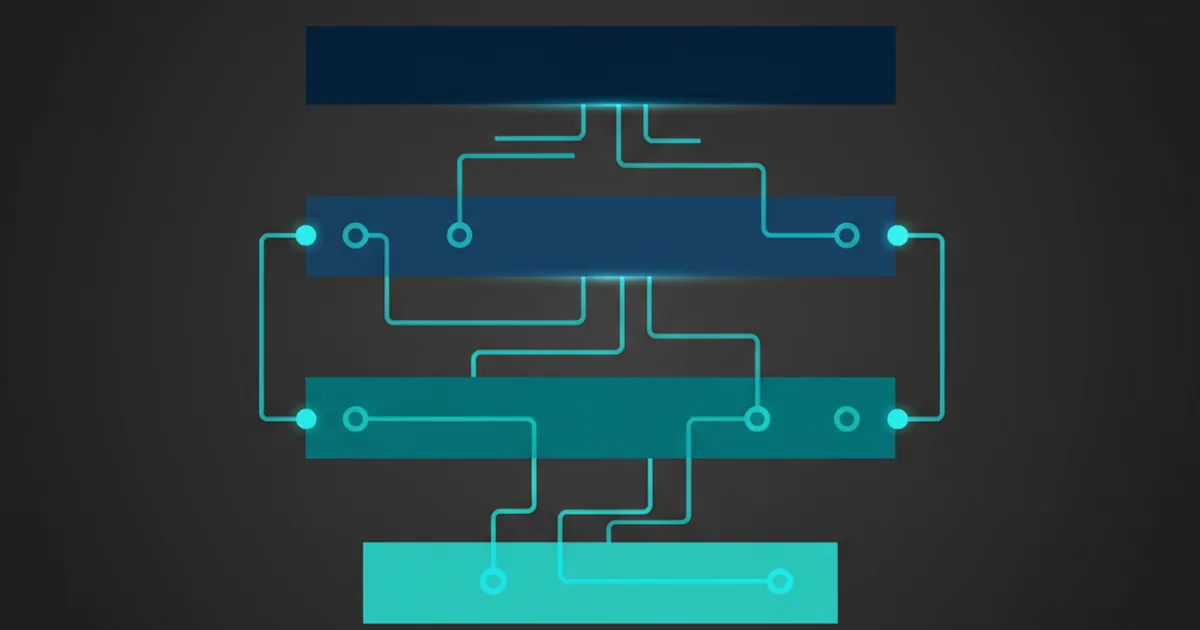
Every production warm transfer stack in 2026 sits on five layers. Each layer has narrow responsibilities, and most failures trace back to a layer trying to do another layer's job.
- Layer 1: Lead frontends. The data sources. Web forms, click-to-call widgets, paid-media landing pages, third-party publisher feeds, list providers, opt-in databases. Responsibilities: capture consent language and timestamp, capture IP and source URL, hash and store for audit, push into the suppression and routing layer cleanly.
- Layer 2: Routing logic. The decision engine that decides which lead, in which order, at which time-of-day, on which dialer line, into which fronter team. Responsibilities: apply DNC and internal suppression, apply state-time-of-day rules, apply re-attempt cadences, apply consent-class filters (express written consent vs. inquiry-only). This layer is where most TCPA failures originate when suppression is incomplete.
- Layer 3: Dialer. The telephony layer that places the actual call. Predictive, progressive, preview, or manual click-to-dial, depending on the consent class and the call type. Responsibilities: caller-ID strategy, retry logic, abandonment thresholds (the TCPA-defined 3 percent ceiling for ATDS use), call recording trigger, telephony events (SIP signaling per IETF RFC 3261, audio per RTP per RFC 3550) into the desk software.
- Layer 4: Fronter desk. The fronter's working surface. CTI integration with the dialer, real-time visibility into the licensed-agent queue (this is non-negotiable, see Section 5), the qualification script, the disclosure prompts, and the warm transfer button. Responsibilities: pre-qualification, location and recording disclosure, consent capture, hand-off initiation.
- Layer 5: Licensed-agent landing. The receiving end. The licensed US agent's softphone or contact-center console, with the inbound transfer queue, the context payload (qualification answers, captured consents), and the post-call disposition fields that close the loop back to the routing layer. Responsibilities: take the warm transfer, complete the regulated conversation, disposition the lead.
Generic contact-center architecture references (publicly documented patterns from Cisco, Avaya, and Genesys) describe analogous layer separation. The point is not the brand. The point is that all five layers exist whether the program is built explicitly or not, and if any layer is missing or collapsed into another, the program is leaking money and compliance posture in measurable ways.
SLA math that actually matters
Five SLAs carry most of the program economics. They are the numbers ops directors should be staring at on a daily dashboard.
- Transfer acceptance rate. The percentage of warm transfers the licensed agent accepts. Industry-typical band in regulated outbound voice is 60 to 80 percent. Below 60 percent means the fronter is over-transferring (qualifying too loosely). Above 90 percent means the fronter is under-transferring (qualifying too tightly and burning leads).
- Hold time on transfer. The seconds between the fronter pressing transfer and the licensed agent picking up. Target: under 30 seconds. Anything above 60 seconds shows up as drop rate spikes and re-quote requests.
- Drop rate during hand-off. The percentage of transfers where the prospect drops between fronter and licensed agent. Target: under 5 percent. Drop rate is the single best leading indicator of licensed-agent staffing misalignment.
- Post-transfer close rate. The percentage of accepted transfers that convert to the program's defined close event (sale, enrollment, application, qualified appointment). Program-specific. Should be tracked daily and triangulated against fronter-team scorecards.
- Compliance error rate. The percentage of calls flagged for TCPA, location-disclosure, or recording-consent issues on QA review. Target: as close to zero as the program can hold. Industry KPI ranges documented in DMG Consulting industry reports.
Measure the compliance error rate on a stratified sample rather than a random one. Random sampling under-covers exactly the calls that matter, so pull every disputed or escalated call plus a fixed quota per fronter per week, and keep new hires in their first 30 days at a heavier sampling rate than tenured agents. Score against a written rubric where each flag maps to the specific disclosure it failed, otherwise the metric records reviewer opinion instead of a defect you can coach.
The SLAs interact. If transfer acceptance drops, the fronter team will compensate by over-qualifying, post-transfer close rate will tick up but raw qualified volume will fall. If licensed-agent staffing falls behind dialer pace, hold time rises, drop rate rises, and post-transfer close rate falls within the same week. Run the five together on a single dashboard and the program tells you what is wrong without anyone having to ask.
Where compliance posture lives in the architecture
Compliance is not a fronter-desk feature. It is distributed across all five layers, and the program that puts it all on the fronter is fragile by design. The FCC's framework (TCPA, 47 USC 227; 47 CFR Part 64 Subpart L) and the September 2024 declaratory ruling (FCC Declaratory Ruling, CG Docket No. 02-278, September 2024) push obligations into the architecture, not just the script.
- Consent capture lives at Layer 1. Express written consent under the TCPA must be captured at the lead source, with timestamp, IP, and the exact disclosure language presented. Re-capturing it on the call is too late.
- Suppression and consent-class filtering live at Layer 2. DNC checks (federal and state), internal suppression, prior-consent class, time-of-day windows. A clean routing layer is the most cost-effective TCPA defense the program can have.
- Dialer-mode selection lives at Layer 3. Manual click-to-dial versus predictive ATDS is a consent-class decision, not a productivity decision. The abandonment ceiling on ATDS use sits in the FCC's TCPA framework.
- Location disclosure and recording notification live at Layer 4. The fronter says the words. The architecture has to make those words mandatory in the script, audited on the recording, and recoverable in QA.
- Retention and monitoring live across Layer 5 and the centralized log. Call recordings, disposition data, consent artifacts, and QA scoring all need centralized retention that survives audit. Industry guidance on call-recording retention windows varies by vertical and state law.
Common architecture mistakes that cost buyers in 2026
- The fronter desk has no real-time view of the licensed-agent queue. Result: fronters over-transfer when the queue is already saturated, hold times spike, drop rate explodes. Fix: surface a live queue depth indicator on the fronter desk and gate the transfer button on queue health.
- Consent capture happens on the call rather than at the lead source. Result: every call carries TCPA exposure the lead source could have eliminated. Fix: push consent capture to Layer 1 and let the dialer trust the routing layer.
- Dialer mode is selected for productivity rather than consent class. Result: predictive dialing into inquiry-only leads, abandonment-rate breach, regulatory exposure. Fix: route consent classes to dialer modes at Layer 2.
- Disposition data does not close the loop back to routing. Result: dead leads keep getting re-dialed, hot leads do not get rapid follow-up, the model has no learning signal. Fix: post-call dispositions at Layer 5 must write back into the suppression and re-attempt rules at Layer 2.
- The warm transfer is structurally cold. The fronter clicks transfer, the licensed agent gets a ringing line with no context, the prospect hears music. Fix: enforce the bridge-then-introduce-then-drop sequence as a system rule, not a coaching note.
- QA only listens to the fronter side of the call. Result: licensed-agent compliance drift goes undetected for months. Fix: stitch the full call (fronter side plus licensed-agent side) into one recording and QA both halves.
How CFG's architecture handles each layer
CFG runs the fronter desk and the layers that feed into it. CFG agents pre-qualify and warm-transfer. CFG is not licensed. Regulated handling sits with the client's licensed US closers at Layer 5.
- Layer 1 (lead frontends). CFG ingests from the client's lead sources with consent metadata intact (timestamp, source URL, hashed identifier, exact disclosure text). If the client wants CFG to run any frontend forms or click-to-call assets, the consent capture is built into the asset, not the call.
- Layer 2 (routing). CFG operates suppression and consent-class routing on the dataset the client provides. DNC layers, time-of-day windows, attempt cadences, all driven from clean configuration. The client owns the underlying consent posture and CFG operates within it.
- Layer 3 (dialer). CFG runs dialer infrastructure aligned to the consent class. Manual click-to-dial for inquiry-only leads. Predictive only where prior express written consent is on file. Caller-ID strategy aligned to FCC and STIR/SHAKEN guidance.
- Layer 4 (fronter desk). CFG fronters operate from scripted qualification flows with mandatory location-disclosure and recording-consent prompts. The hand-off button surfaces live licensed-agent queue health. Same-time-zone Caribbean nearshore staffing (Jamaica, Saint Lucia, Trinidad, Belize, Guyana, Colombia, Toronto HQ) gives the program native-English Caribbean voice and bilingual English-Spanish agents in Colombia on US Eastern hours without graveyard premiums.
- Layer 5 (licensed-agent landing). CFG warm-transfers to the client's licensed US closers. The bridge-then-introduce-then-drop sequence is enforced as a desk-software rule. The full call (both halves) is captured for QA and audit. Post-call dispositions flow back to Layer 2.
The architecture is conventional. The CFG wedge is execution at Layer 4 (fronter desk) with same-time-zone, native-English, market-competitive-wage Caribbean nearshore labor, while the client keeps regulated work inside the US licensed perimeter at Layer 5. Buyers comparing Layer 4 sourcing options across Caribbean, Mexico, and nearshore outsourcing in Costa Rica typically use the nearshore-versus-offshore-versus-onshore framework to map fit against vertical, time zone, and language requirements. For a ranked shortlist of the best nearshore customer service locations for US companies 2025 to 2026, see our vendor reference.
Get the next architecture update
When the FCC or DMG Consulting publish new architecture or SLA guidance, we send a re-benchmarking note. No pitch. Unsubscribe anytime.
Sources
- Federal Communications Commission. Telephone Consumer Protection Act framework, 47 U.S.C. § 227. Statutory text and implementing rules.
- Federal Communications Commission. Declaratory Ruling, CG Docket No. 02-278. September 2024.
- DMG Consulting. Industry reports on contact-center warm-transfer KPIs and routing architecture.
- Internet Engineering Task Force. RFC 3261 (Session Initiation Protocol) and RFC 3550 (Real-time Transport Protocol). Telephony signaling and audio transport standards referenced by contact-center routing.
- Cisco, Avaya, and Genesys public technical documentation. Reference architectures for contact-center routing patterns.
Frequently Asked Questions
What is warm transfer architecture in outbound voice?
Warm transfer architecture is the end-to-end design of how an outbound voice program moves a contact from a pre-qualifier (the fronter) to a closer (a licensed agent) without dropping the consumer, breaking consent, or losing context. In 2026 it is composed of five layers: lead frontends, routing logic, dialer, fronter desk, and licensed-agent landing. Each layer carries specific SLA obligations and a specific share of compliance posture.
What is the difference between warm transfer, cold transfer, and blind transfer?
A warm transfer is one where the fronter introduces the prospect to the licensed agent on the same live call, hands off context, and stays on long enough to confirm acceptance. A cold transfer hands the prospect over without an introduction. A blind transfer drops the prospect into the licensed-agent queue with no fronter intervention at all. Warm transfer is the only model that meaningfully protects post-transfer close rate and consent posture in regulated outbound voice.
What SLAs matter most in warm transfer programs?
Five SLAs carry most of the program economics: transfer acceptance rate (industry-typical 60 to 80 percent), hold time on transfer (target under 30 seconds), drop rate during hand-off (target under 5 percent), post-transfer close rate (program-specific but tracked daily), and compliance error rate (target near zero for TCPA, location disclosure, and recording consent). Industry-typical KPI ranges are tracked in DMG Consulting industry reports.
Where does TCPA compliance live in the architecture?
TCPA compliance under 47 U.S.C. § 227 and the September 2024 FCC declaratory ruling on CG Docket No. 02-278 lives across multiple layers. Consent capture lives at the frontend layer. Suppression lives at the routing layer. Dialer mode (manual versus ATDS) lives at the dialer layer. Location disclosure and recording notification live at the fronter desk. Retention and monitoring live across the licensed-agent landing and the program's centralized log. A warm transfer architecture that puts all compliance at the fronter desk is fragile by design.
Does CFG handle the licensed-agent layer?
No. CFG runs the fronter desk and the pre-qualification layer only. CFG agents are fronters, not licensed agents. Pre-qualification, consent capture, and warm hand-off happen on the CFG side. Licensed handling (rate quotes, plan enrollment, binding adjustments, debt validation language) sits with the client's licensed US closers on the receiving end of the warm transfer. The fronter model keeps regulated work inside the US licensed perimeter.
Re-architect your warm transfer stack
Stress-test the architecture against your numbers
CFG runs the fronter desk layer in Jamaica, Saint Lucia, Trinidad, Belize, Guyana, Colombia, and Toronto HQ. Native English, US Eastern overlap, warm-transfer to your licensed US closers. The 60-second CFG calculator compares your current vendor's loaded hourly against the methodology behind this architecture. Pilot Month from one agent, no setup fee, no annual prepay, live seven business days after a completed kickoff.
Already modeled it? Book a 20-minute discovery call.