By Miki Furman, Founder and CEO. Last updated: 2026-09-26.
Disclosure: Call Force Global publishes this guide and is one of the six alternatives listed. Every competitor price below was read off that provider's own pricing page on 4 September 2026 using a desktop browser. Where a provider does not publish a rate, we say that rather than carry a guess.
Short version. The best AnswerForce alternatives are PATLive, Ruby, Smith.ai, AnswerConnect, MAP Communications and Call Force Global. Five of the six run the model AnswerForce runs, a shared receptionist pool billed by the minute or the call, and the first practical difference between them is whether you can compare them at all: PATLive, MAP Communications, Ruby and Smith.ai publish a full rate card, while AnswerConnect and AnswerForce route their pricing pages to a form. Call Force Global sells a different unit, one named nearshore agent on your account at $13 to $19 per hour all-in, and publishes that rate too. For a trade with a genuinely busy night phone, an always-on pool is the right purchase and we will say so before you read any further.
What AnswerForce does well, and why buyers still shop around
Credit first. AnswerForce's own services page describes 24/7 live answering with message taking, live call transfer, appointment scheduling, lead capture and qualification, lead re-engagement and after-hours answering, states that receptionists work in shifts covering the business around the clock, and says after-hours answering comes with all plans at no extra cost. It also states that every plan includes outbound calls and live web chat, that a customized call script is built with you at registration and can be updated any time in the app, and that you get an instant notification and call summary immediately after every call. The company site adds a tech toolkit of scheduling, a business phone line, live chat, team messaging and video meetings, says it serves more than 50 industries, publishes customer stories from Mathnasium, Ace Handyman and TeamLogic IT, and pledges to use real people in customer interactions. For a plumbing or HVAC shop whose worst outcome is a missed emergency at 1am, that is a well-aimed product.
The reasons buyers still go looking are structural rather than complaints:
- You cannot shortlist without a call. Prices sit behind a registration form, so putting AnswerForce next to a published card means committing to a sales conversation before you know whether the numbers are close.
- Bundles fit worst at both ends. A monthly minute allowance is cheapest per minute at exactly the top of the bundle. Leave minutes unused and you overpaid. Run past them and the overage rate applies to every extra minute.
- A pool answers, not a person. Whoever is free takes the call. Right for dispatch and message taking, expensive when the caller expects to be known or the intake has branches.
- The work grows past reception. Quoting, chasing the estimate nobody signed, rebooking a cancelled slot and requalifying last quarter's leads are jobs for someone on a shift.
- The vertical shaping cuts both ways. AnswerForce says it serves more than 50 industries, but the site, the case studies and the intake are built around service and field work. Buyers outside that shape often find the fit less exact than a general provider would give them.
Who publishes a price, and who makes you ask
Before comparing features, it is worth knowing which of these providers will tell you a number without a phone call. We loaded each provider's own pricing page on 4 September 2026 with a desktop browser and recorded what came back. Anyone can repeat this in about four minutes.
| Provider | Pricing page loaded | What came back on 4 September 2026 | Lowest published monthly price |
|---|---|---|---|
| PATLive | patlive.com/pricing | A full rate card, eleven answering tiers shown by default plus separate chat tiers, with the per-minute overage printed on each | $49 |
| MAP Communications | mapcommunications.com/pricing | A full rate card, four tiers, with the per-minute overage printed on each | $49 |
| Ruby | ruby.com/plans-and-pricing | A full rate card, four receptionist minute tiers plus chat bundles | $250 |
| Smith.ai | smith.ai/pricing/receptionists | A full rate card, three per-call tiers plus enterprise by quote, with per-call overage printed on each | $300 |
| AnswerConnect | answerconnect.com/plans | A quote request form asking for name, company, email and phone | Not published |
| AnswerForce | answerforce.com/pricing | A redirect to a country home page; the See Prices button opens a registration form | Not published |
| Call Force Global | callforce.global/pricing | A full rate card by function; answering is a dedicated desk from two full-time agents | Dedicated seats from $13.00 per hour; two full-time agents run $4,160 a month |
The finding: four of the seven pricing pages we loaded on 4 September 2026 returned a readable rate card. Two returned a form. Quoting rather than publishing is a legitimate choice and often a sensible one, because the right price genuinely does depend on how your calls behave and a scoped quote can come in under a rate card. What it costs you is time: every gated vendor adds a sales cycle before you can even rank it, so most buyers end up comparing two published cards and one quote and calling that a shortlist.
The published plans, normalized to one unit
Entry prices are not comparable on their own. A $49 plan with no included minutes and a $250 plan with fifty of them are not priced on the same basis. Divide each published tier by its included volume and the field separates properly. The prices below are each provider's own, read 4 September 2026; the right-hand column is our division.
| Provider | Published plan range (4 September 2026) | Billing unit | Cost per included unit, cheapest tier to dearest |
|---|---|---|---|
| MAP Communications | $179 for 125 minutes to $649 for 500 minutes | Minute | $1.43 down to $1.30 |
| PATLive | $99 for 50 minutes to $6,899 for 5,000 minutes | Minute | $1.98 down to $1.38 |
| Ruby | $250 for 50 minutes to $1,725 for 500 minutes | Minute | $5.00 down to $3.45 |
| Smith.ai | $300 for 30 calls to $2,100 for 300 calls | Call, not minute | $10.00 down to $7.00 per call |
| AnswerConnect | Not published | Minute | By quote |
| AnswerForce | Not published | Minute | By quote |
| Call Force Global | $13 to $19 per agent hour, dedicated, from two full-time agents | Agent hour | Not billed per minute |
Two things fall out of that. The published minute rates cluster between $1.30 and $1.98 except at the premium end, where Ruby sits at two to two and a half times that for a deliberately different caller experience. And Smith.ai is not in the same column at all, because a call and a minute are different things and a per-call plan gets cheaper the longer your conversations run while a per-minute plan gets dearer. When your quote from a gated vendor arrives, convert it into the same unit before you rank it. Our PATLive alternatives guide takes the next step and converts published minute plans into a cost per hour of live conversation, which is the unit you actually staff in.
Want a number without the sales cycle?
Native-English nearshore agents at $13 to $19 per hour all-in, live 7 business days after kickoff. Send the scope and a senior ops manager replies within 24 hours with line-item pricing, no discovery call required.
The six AnswerForce alternatives
Descriptions stick to each provider's own public materials, read on 4 September 2026. Where a provider does not publish something, we leave it out rather than fill the gap.
1. PATLive
PATLive is the closest like-for-like swap that will tell you a price today. Its published plans run from $49 a month pay as you go at $2.99 per additional minute, through $189 for 100 minutes and $759 for 500, up to $6,899 for 5,000 minutes at $1.49 over, with call screening and transfers, message taking, lead collection, appointment scheduling, new client intake, order processing, emergency dispatch and bilingual support included on every plan plus a 14 day free trial. The company states its service is 100 percent human with no AI, that receptionists complete over 120 hours of training before a first call, that there are no add-on fees for weekend or after-hours coverage, and that it has been operating for over 35 years. Best fit: a straight swap where the requirement is dependable around-the-clock answering and you would rather compare a rate card than book a call. See our PATLive alternatives guide and Call Force Global vs PATLive.
2. MAP Communications
MAP Communications is employee-owned and prices slightly under PATLive per included minute at the entry tiers. Its published plans read 4 September 2026 are $49 a month pay as you go at $1.37 per additional minute, $179 for 125 minutes at $1.30 over, $339 for 250 minutes at $1.28 over and $649 for 500 minutes at $1.28 over. Every plan lists a toll-free number, 24/7 coverage, English and Spanish fluency, no long term contracts, HIPAA compliance and PCI-DSS, HITRUST and SOC 2 certification. That certification stack matters if your calls touch health or payment data, which several trades adjacent to medical facilities do. Best fit: around-the-clock answering where the intake has branches and the compliance box needs ticking. See Call Force Global vs MAP Communications.
3. Ruby
Ruby sits at the premium end of virtual reception, with live receptionists around the clock, website chat, call routing, lead qualification and intake, appointment scheduling, outbound assistance and bilingual answering included on every plan so the only variable is minutes. Published receptionist plans read 4 September 2026 are $250 for 50 minutes, $395 for 100, $720 for 200 and $1,725 for 500, with chat bundles priced separately from $115 for 10 chats. Tier for tier that is two to two and a half times the per-minute rate of the plainer options, and Ruby is open that you are buying the caller experience rather than the arithmetic. Best fit: home services firms selling on trust and a premium ticket, where the first thirty seconds of a call is part of how the job is won. Our fuller write-up is at Ruby Receptionist alternatives.
4. Smith.ai
Smith.ai puts AI screening and web chat in front of human receptionists and bills by the call rather than the minute, which flips the arithmetic if your conversations run long. Published receptionist plans read 4 September 2026 are $300 a month for 30 calls with overage at $11.50 per call, $810 for 90 calls at $10.50 over, and $2,100 for 300 calls at $8.50 over, with an enterprise tier by quote. The same page lists lead qualification, new client intake and 24/7 live staffing at no extra charge, and appointment booking at $1.50 per call. Best fit: chat-led inbound with a CRM worth wiring into, and calls that are short and numerous rather than long and few. See Call Force Global vs Smith.ai and our Smith.ai alternatives roundup.
5. AnswerConnect
AnswerConnect runs a large shared 24/7 answering operation with live chat, appointment scheduling and order taking, sold on monthly plans that include a bundle of minutes and charge a per-minute rate beyond it. Like AnswerForce it quotes rather than publishes. Loading its plans page on 4 September 2026 lands on a quote request form asking for name, company, email and phone. Best fit: businesses whose worst outcome is a missed call at 2am and whose calls are mostly simple to handle. Our AnswerConnect alternatives guide separates the coverage hours you are buying from the answered minutes you actually get, which is the single most useful sum for a trades buyer to run.
6. Call Force Global
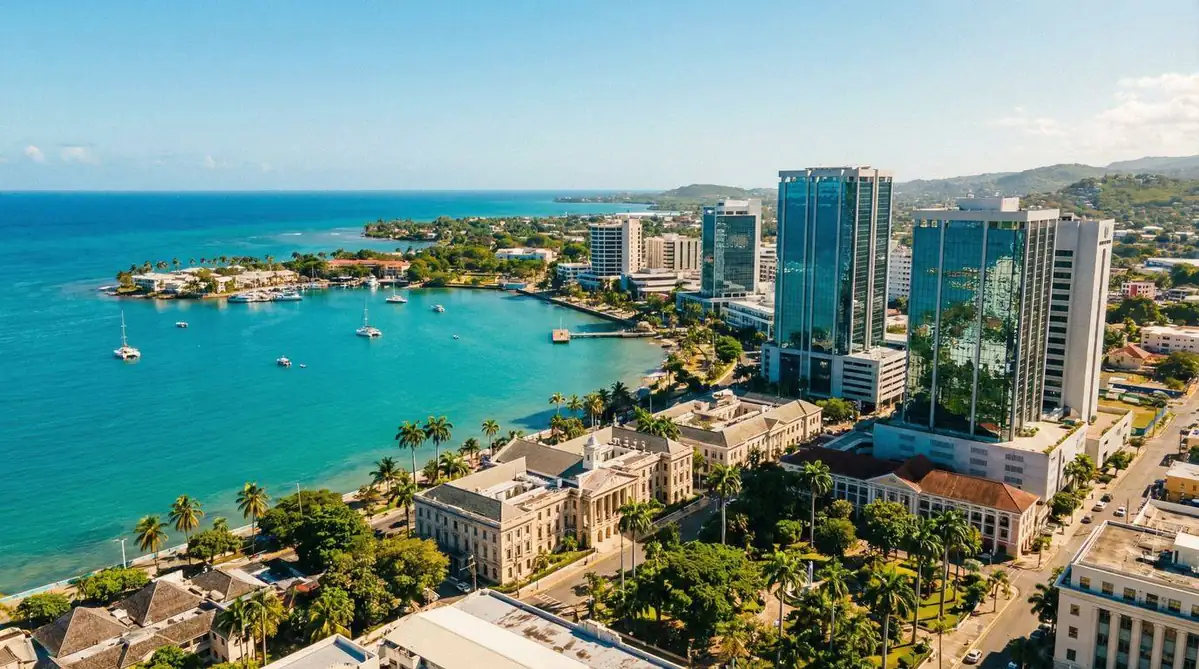
We publish this page, so read this paragraph as our own claim rather than a neutral verdict. Call Force Global changes the unit you buy. Instead of minutes from a pool you get a named nearshore agent in Jamaica, Saint Lucia, Trinidad and Tobago, Belize, Guyana or Colombia who works only your account, learns your systems and stays on them, at $13 to $19 per agent hour all-in, month to month, with full US business hour overlap and no setup fee. English and Spanish can come from the same agent, one team handles voice, SMS and email including outbound follow-up, and every desk starts at two full-time agents, with night and weekend hours at $15 to $19. A dedicated desk suits businesses with steady daily volume, roughly 300 or more calls or interactions a month. Below that, a per-call answering service is usually the better buy, and we will say so on the scoping call. The honest trade-offs: for a trade whose calls mostly arrive after dark a shared pool beats us on price and we will say so; we do not sell a proprietary AI chat product; our agents are fronters who warm transfer to your licensed staff rather than licensed advisors; and go-live is 7 business days after a completed kickoff, not an afternoon. Best fit: a busy daytime phone, repeat customers who should not have to explain themselves twice, daily bilingual coverage, or quoting and follow-up work that needs a person. See the answering service, small business answering service and virtual receptionist pages.
Comparison at a glance
| Provider | Model | Published pricing (4 September 2026) | Best for | Weakness |
|---|---|---|---|---|
| AnswerForce | 24/7 answering shaped for trades | Not published; the pricing URL redirects and prices sit behind registration | Dispatch-shaped calls with a high after-hours share | Built around trades intake, thinner outside it |
| PATLive | 24/7 US-based shared answering | Minute plans, $49 to $6,899 per month; extra minutes $2.99 to $1.49 | A like-for-like swap you can price today | A busy daytime phone burns the bundle fast |
| MAP Communications | 24/7 answering with customizable scripts | Minute plans, $49 to $649 per month; extra minutes $1.37 to $1.28 | Branching intake plus a HIPAA and SOC 2 posture | Still a pool, so the script carries the context |
| Ruby | Premium 24/7 virtual reception plus chat | Minute plans, $250 to $1,725 per month; chat from $115 | Premium-ticket work won on the first impression | Two to two and a half times the cost per included minute |
| Smith.ai | AI screening in front of human receptionists | Per-call plans, $300 to $2,100 per month; overage $11.50 to $8.50 per call | Short, numerous, chat-led inbound with CRM depth | Per-call billing punishes long conversations |
| AnswerConnect | Always-on shared answering and chat | Not published; the plans page opens a quote form | Real night and weekend volume on simple calls | You cannot shortlist it on price without asking |
| Call Force Global | A dedicated nearshore desk, from two full-time agents | $13 to $19 per agent hour all-in; two agents on the $13 Staffed Desk run $4,160 a month | Busy business hours, continuity, bilingual, outbound | Beaten on price by a pool when the calls come at night |
Reading the table: the second column is the decision and the third is how quickly you can make it. Six rows sell a share of a pool priced in minutes or calls, one sells a share of a person priced in hours, and two of the seven will not show a number until you talk to someone. Pools win on breadth of coverage for a small number of conversations. A person wins on depth of coverage for a large number of them. Count the share of your calls that arrive outside business hours and the answer usually picks itself.
For a price check on ten providers, eight with published plans, see our small business answering services compared on price and agent location.
When to stay with AnswerForce
An alternatives page that never says "do not switch" is an advertisement. Stay if your after-hours share is genuinely high and dispatch is most of what the receptionist does, because that is the buyer the product is built around and no dedicated-agent model matches always-on coverage cheaply. AnswerForce includes after-hours answering in every plan at no extra cost, says every plan also carries outbound calls and live web chat, and builds a customized script with you that you can edit in the app. Stay if the quote you already hold is competitive once you convert it into the same unit as everyone else's, since a scoped quote genuinely can come in under a published card. Switch when the daytime phone gets busy enough to fill real hours, when customers start repeating themselves to whoever picks up, or when the job grows past taking the message into quoting, chasing and rebooking.
Where Call Force Global fits
We are not an always-on pool and we are not pretending to be one. If somebody live has to answer at 3am and there are only a handful of such calls, a shared pool is the right purchase and it is cheaper than we are. What we sell is the other half of the problem: a dedicated team, starting at two full-time agents, who cover your business hours, know your accounts and your regulars, book into your calendar and make the follow-up calls nobody has time for. The night tail can stay with a pool, or move onto the desk at $15 to $19 an hour once it is busy enough to keep an agent working. Nearshore delivery is what makes that affordable, because our agents work the same hours as your customers instead of the opposite side of the clock.
A US onshore seat runs $35 to $48 an hour fully loaded on our own estimate built on Bureau of Labor Statistics wage data, so the $13 to $19 band lands 46 to 73 percent below it. If you want to test that without a procurement cycle, the Pilot Month is the starting point: an intro month from two full-time agents, billed at the normal hourly rate for the desk you choose. Two agents for 160 hours each on the $13.00 Staffed Desk come to $4,160. After the month it rolls on month to month, and either side can end it with 30 days' notice. If your after-hours count says a pool is the better answer, we would rather tell you that on the call than sell you the wrong shape. The after-hours call center page covers the night and weekend side, and the cost calculator compares either shape against hiring in house.
Frequently asked questions
What are the best AnswerForce alternatives?
The alternatives buyers weigh most often are PATLive and MAP Communications for plain round-the-clock minute-based answering, Ruby for a premium virtual reception experience, Smith.ai for AI screening in front of human receptionists, AnswerConnect for always-on shared coverage, and Call Force Global for a dedicated nearshore desk that starts at two full-time agents, at $13 to $19 per agent hour all-in. Four of those publish a full rate card you can read today. If you are leaving because the intake stopped being simple rather than because the phone stopped being answered, the useful split is not which brand, it is whether you buy minutes from a pool or hours from a person.
How much does AnswerForce cost?
AnswerForce does not publish a price. Loading its pricing URL on 4 September 2026 with a desktop browser returns a country home page rather than a rate card, and the See Prices button leads to a registration form that asks for name, email, phone and company before it will show plans. Its own service pages describe monthly plans that include a bundle of minutes, since they note that plan minutes can also be spent on call-backs and outbound lead follow-up, and state that after-hours answering is included in every plan at no extra cost. Quoting rather than publishing is a normal choice in this category and a scoped quote often beats a rate card. It does mean you cannot compare AnswerForce on price until you have had the conversation.
Which answering services publish their prices?
We loaded seven pricing pages with a desktop browser on 4 September 2026. Four returned a readable rate card: PATLive, MAP Communications, Ruby and Smith.ai. Two returned a form instead: AnswerConnect, whose plans page opens a quote request, and AnswerForce, whose pricing URL redirects to a country home page with prices behind registration. Call Force Global publishes its own rates, which is easy to say when you are the one writing the page. The published entry prices span $49 to $300 a month, but the included volume behind them differs so widely that the headline number tells you almost nothing until you divide it by the minutes.
What is the best answering service for home services and trades?
For a trade with a genuinely busy night and weekend phone, an always-on shared pool is usually the right purchase, and AnswerForce builds its product around exactly that buyer. Its services page lists message taking, live call transfer, appointment scheduling, lead capture and qualification, lead re-engagement and after-hours answering, and states that receptionists work in shifts covering the business 24/7. PATLive and MAP Communications sell the same shape with a published rate card if you want to compare on price first. A dedicated agent only wins for a trade once the daytime phone is busy enough to fill real hours and the work has grown past dispatch into quoting, follow-up and rebooking.
Is Call Force Global a good AnswerForce alternative?
For some buyers, and the bias is disclosed: Call Force Global publishes this page and is one of the options on it. Call Force Global staffs named agents in Jamaica, Saint Lucia, Trinidad and Tobago, Belize, Guyana and Colombia at $13 to $19 per agent hour all-in, month to month, with full US business hour overlap, English and Spanish from the same agent, and voice plus SMS plus email handled by one team. Every desk starts at two full-time agents (40 hours a week each). It is a poor fit for a trade whose calls mostly arrive at night, for low or sporadic volume where a minute plan is cheaper, for buyers who require US-based agents, and for anyone who needs cover switched on today, because go-live takes 7 business days after a completed kickoff. Our agents are fronters who warm transfer to your licensed staff, not licensed advisors.
When should you stay with AnswerForce?
Stay if the after-hours share of your calls is high and dispatch is most of what the receptionist does, because that is the buyer the product is built for and no dedicated-agent model matches always-on coverage cheaply. AnswerForce includes after-hours answering in every plan at no extra cost and says every plan also includes outbound calls and live web chat, and its site pledges to use real people in customer interactions. Stay if your quoted rate is competitive once you have it in writing, since a scoped quote can beat a published card. Switch when the daytime phone gets busy enough to fill real hours, when callers start repeating themselves to a pool, or when the job grows past taking the message.
Sources, and how to check them yourself
Every price and observation attributed to another company on this page comes from that company's own site, loaded on 4 September 2026 with a desktop browser. There are no review scores, headcounts or operating statistics here that a provider does not publish itself. Sites change and geo-routing differs by country, so go and look rather than trusting a snapshot on a competitor's website.
- AnswerForce. Service list, script and notification handling, after-hours inclusion, outbound and web chat inclusion read on the answerforce.com answering services page. The tech toolkit, industry count, customer stories, real-people pledge and the pricing redirect observed at answerforce.com/pricing, which resolved to a country home page from our location.
- PATLive. Plan prices, per-minute overage and included capabilities read on patlive.com/pricing. The 100 percent human claim, the 120 hours of training and the over 35 years in business read on patlive.com/why-patlive.
- MAP Communications. Plan prices, per-minute overage and the certification list read on mapcommunications.com/pricing.
- Ruby. Receptionist minute plans and chat bundles read on ruby.com/plans-and-pricing.
- Smith.ai. Per-call plans, overage rates and included features read on smith.ai/pricing/receptionists.
- AnswerConnect. The plans page and the quote form it opens, read at answerconnect.com/plans.
- Call Force Global. Our rates are our own published figures, set out on pricing and how pricing works. The per-unit column and the page-load audit above are our own work, with the method printed next to them.
Run your numbers with us
Want the quote before the sales cycle?
Send two months of call logs and the hours you need covered. We will bucket the calls by hour, show your real after-hours share, and tell you which model that number points at. If it points at a shared pool rather than at us, that is what we will say. Written quote in 24 hours.
AnswerForce and the other company names and brands on this page are trademarks of their respective owners and are referenced for comparison and informational purposes only. This page is published by Call Force Global, which is one of the options listed. Call Force Global is not affiliated with, endorsed by, or connected to any other provider named here. Prices, capabilities and page behaviour reflect each provider's own public materials as observed on 4 September 2026 and simplify them; no pricing, review score, client name or operating statistic has been attributed to any provider that the provider does not publish itself. Confirm current capabilities, pricing and terms with each provider directly. Call Force Global, 375 University Avenue, Suite 3268, Toronto, ON, M5G 2J5, CA.