By Miki Furman, Founder and CEO. Last updated: 2026-09-26.
Disclosure: Call Force Global publishes this comparison. CFG operates bilingual call center teams in Colombia and does not operate in the Philippines, so weigh our perspective accordingly. Every figure below is attributed to its published source, and the scenarios where the Philippines wins are stated plainly.
Short version. The Philippines wins on raw hourly cost, English-only scale, and overnight back-office support. Colombia wins on bilingual English-Spanish coverage from one team, time zone alignment (UTC-5 year-round, same shift as US Eastern), and real-time collaboration with US operations. If your callers include Spanish speakers, Colombia is usually the lower-friction default, because the Philippines has limited native Spanish capacity outside specialized programs. If your program is English-only, high-volume, and asynchronous, the Philippines is hard to beat. For the native-English version of this decision, see our Jamaica vs Philippines comparison.
The two markets at a glance
The Philippine BPO sector is the largest voice outsourcing market in the world. The Information Technology and Business Process Association of the Philippines (IBPAP) reports the industry employed roughly 1.82 million workers and generated about $38 billion in revenue heading into 2025. Decades of US client work have built deep operational maturity in voice, tech support, and back-office processing.
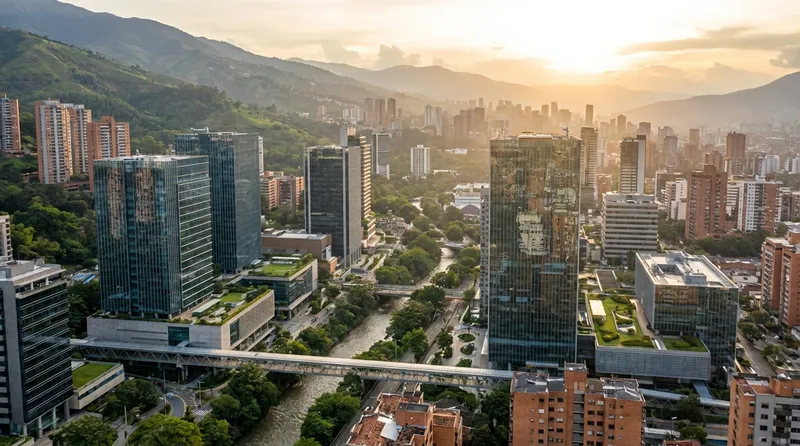
Colombia is Latin America's third-largest BPO market, with over 600,000 workers in the outsourcing industry according to the Colombian Association of BPO (BPrO) and industry reports. The sector is concentrated in Bogota, Medellin, and Barranquilla, backed by government programs (ProColombia promotion, free trade zones, workforce training subsidies) and a National Bilingualism Program that has expanded English proficiency across the workforce.
Different strengths, different defaults. The Philippines is an English-only scale machine. Colombia is the market where one agent answers in English, switches to Spanish mid-call, and works the same business hours as your US team.
Side-by-side comparison
The dimensions below are the ones that move US buying decisions between these two markets, as of July 2026. Where a value depends on program shape, we say so.
| Dimension | Colombia | Philippines |
|---|---|---|
| Time zone | UTC-5 year-round (no DST). Matches US Eastern in winter, 1 hour behind in DST. | UTC+8. 12 to 13 hour offset from US Eastern. |
| Same-shift work | Yes. Agents work US business hours during their day. | No. Agents work US-aligned shifts during their local night. |
| Typical hourly rate | $13 to $19 fully loaded (CFG band, bilingual included) | $6 to $14 fully loaded |
| Industry size | 600,000+ BPO workers (BPrO) | 1.8 million plus BPO workers (IBPAP) |
| English | Trained B2-C1 proficiency; EF EPI fastest-improving tier in Latin America | Official language; EF EPI among the highest fluency in Asia |
| Spanish | Native. English-Spanish handled by the same agent | Limited native capacity outside specialized programs |
| Attrition signals | No published national series; any Colombian band is a vendor estimate, not a measurement | 45 percent in total in 2022, 43 percent on 2023 data (CCAP with Willis Towers Watson) |
| Data protection law | Law 1581 of 2012 (GDPR-aligned principles) | Data Privacy Act of 2012 (National Privacy Commission) |
| Best for | Bilingual voice, US-daytime programs, 10 to 100 seat programs needing one team for two languages | English-only back-office at scale, overnight coverage, 100 plus seat programs |
For the broader nearshore-versus-Philippines framing across the whole Caribbean and Latin American region, see nearshore vs Philippines call center. This page focuses specifically on Colombia.
Bilingual English-Spanish: the structural difference
This is the axis where the two markets are not interchangeable. Colombian agents are native Spanish speakers trained to B2-C1 English through structured language assessments, which means a single agent can serve English and Spanish callers from the same seat, switch languages within one call, or cover separate queues with equal fluency. One team, two languages, one QA program.
The Philippines cannot match that. Philippine English fluency is excellent, but the market has limited native Spanish capacity outside specialized programs. A US program that needs Spanish coverage through a Philippine vendor usually ends up bolting on a second vendor or a small specialized team, with the duplicated management overhead that implies.
The bilingual bench carries a real premium inside Colombia: our Caribbean and nearshore wage index puts senior bilingual English plus Spanish pay 35 to 45 percent above monolingual Spanish work in the same market. Even with that premium, bilingual Colombian seats price inside CFG's standard $13 to $19 per hour all-in band. For the roles this maps to, see bilingual customer support, bilingual SDR, and hire a bilingual rep.
Time zone alignment
Colombia runs UTC-5 year-round with no daylight saving. From November to March it matches US Eastern Time exactly; during US daylight saving it sits one hour behind, so a Bogota 8am to 5pm shift covers 9am to 6pm Eastern. Colombian agents work US business hours during their own daytime, which keeps QA huddles, live coaching, and supervisor escalation on one shift.
The Philippines is UTC+8, a 12 to 13 hour offset from US Eastern. To cover a US 9am to 5pm Eastern shift, a Philippine agent works roughly 9pm to 5am local time. The industry has professionalized night-shift work over decades (shift bonuses, transport, on-site amenities), and for self-contained asynchronous work the offset is a manageable trade-off. For work that needs continuous real-time collaboration with US managers, the offset is a tax paid daily: training lands off-shift, escalations wait for the Philippine evening, and US holiday calendars diverge.
Cost: how the rates compare
As of July 2026, fully-loaded vendor rates run roughly $6 to $14 per hour in the Philippines and $13 to $19 per hour in Colombia. Both markets deliver large savings against US onshore staffing; Colombia typically lands 40 to 70 percent below comparable US operations depending on program complexity.
Under the hourly rate, the loading math differs. Fully-loaded cost in Colombia runs roughly 1.8x to 2.2x agent take-home once you add parafiscales and social security contributions, paid leave and 13th-month accrual, facilities, licensing, and supervision overhead (methodology in the wage index). Entry-level monolingual agents in Colombia benchmark near $1,550 per month fully loaded, the lowest monolingual base in the index's four markets; it is the bilingual premium that moves Colombian seats up the band.
The honest framing: for English-only, low-touch, high-volume work, the Philippine rate advantage is real and compounds at scale. For bilingual voice, Colombia is usually cheaper in practice than a Philippine program plus a separate Spanish solution, before counting the management overhead of running two teams. For program-specific math, run the cost calculator or see current rate cards.
Attrition and talent pool
The Philippine numbers are published and worth taking seriously. Contact center attrition was 45 percent in total in 2022, made up of 31 percent voluntary and 14.1 percent involuntary, easing to 43 percent on 2023 data reported by CCAP in May 2025 (CCAP Attrition and Retention Survey, conducted by Willis Towers Watson across 145 member organizations). For a mature-market reference point, US contact center attrition runs a 31 percent mean and a 24 percent median (ContactBabel, US Contact Center Decision-Makers' Guide, 2024 edition, year-end 2023 data from 189 US contact center managers). No published survey breaks Philippine attrition out by shift, so we will not attach a number to night-shift voice, though a 12 to 13 hour offset that puts agents on local-night work is a real retention pressure.
Colombia has no equivalent published attrition series, so we do not quote a national figure, and any Colombian band you see, ours included, is a vendor estimate rather than a published measurement. The directional signals we can point to: Colombian BPO agents work daytime shifts aligned with US hours rather than inverted night shifts, and BPO operations in Medellin often report lower attrition than Bogota, helped by lower cost of living with comparable infrastructure. On talent depth, 600,000-plus workers means Colombia staffs one-agent pilots or 500-seat programs without the labor constraints of smaller Caribbean markets, though the Philippines' 1.8 million-strong bench remains the deepest in the world for English-only scale.
Compliance and data residency
Both countries have real data protection frameworks. Colombia's Law 1581 of 2012 establishes consent, purpose limitation, and data subject rights aligned with GDPR principles. The Philippines operates under the Data Privacy Act of 2012 with the National Privacy Commission as regulator, plus decades of HIPAA, ISO 27001, and PCI-DSS delivery for Fortune 500 buyers. Reputable vendors in both markets maintain SOC 2, PCI DSS, and HIPAA compliance; verify certifications vendor by vendor rather than assuming by geography.
One structural note for regulated US verticals: CFG agents in Colombia are non-licensed fronters. They handle intake, qualification, member services, scheduling, and retention in English and Spanish; any task that requires a US license stays with your in-house licensed staff and arrives by warm transfer. Same-shift alignment makes that warm-transfer mechanic clean in Colombia, since both ends of the call are working the same business day.
Which fits your program?
- Do your callers include Spanish speakers? Yes leans Colombia decisively; one bilingual team beats two single-language solutions. No keeps both markets in play.
- Voice or back-office? US-daytime voice leans Colombia. Asynchronous back-office and overnight queues lean Philippines.
- Seat count? 10 to 100 seats fits Colombia cleanly, with headroom well beyond. Very large English-only programs (200 plus seats) benefit from Philippine bench depth.
- Real-time collaboration with US ops? Daily huddles, live coaching, and same-day escalation lean Colombia. Self-contained work tolerates the Philippine offset fine.
- English-only, with older or native-English-expecting callers? Consider a third option: native-English Caribbean markets. Our Jamaica vs Philippines page covers that decision.
- Hard cost ceiling on English-only work? The Philippines wins on absolute rate.
The honest one-liner. If your program needs English and Spanish from one team on US daytime hours, default to Colombia. If your program is English-only, back-office, overnight, or scale-heavy, default to the Philippines. Both markets deliver excellent service when matched to the right work.
Frequently asked questions
Is Colombia or the Philippines cheaper for call center outsourcing?
The Philippines is cheaper on absolute hourly rate. Typical fully-loaded vendor rates run roughly $6 to $14 per hour in the Philippines and roughly $13 to $19 per hour in Colombia, as of July 2026. The gap narrows fast when the program needs Spanish. A Colombian bilingual agent handles English and Spanish callers from one seat; CFG prices that bilingual seat inside the same $13 to $19 band. Standing up equivalent Spanish coverage through a Philippine program usually means a second vendor or a specialized team, because the Philippines has limited native Spanish capacity outside specialized programs. For English-only back-office at scale, the Philippines wins on raw cost. To verify exact pricing for your program size, request a written quote.
Can Philippine call centers handle Spanish-language support like Colombia?
Generally no, not at comparable depth. The Philippines has limited native Spanish capacity outside specialized programs, so bilingual English-Spanish scope usually points US buyers toward Latin America. Colombia is the structural opposite: agents are native Spanish speakers trained to B2-C1 English proficiency, which means one agent can switch between languages within the same call or cover separate English and Spanish queues with equal fluency. Colombia's National Bilingualism Program has expanded English education nationally, and the EF English Proficiency Index ranks Colombia among the fastest-improving countries in Latin America. If your caller base includes Spanish speakers, that single-team bilingual capability is the deciding difference between the two markets. To verify bilingual coverage for your queues, request a written quote.
How big is the time zone gap between Colombia and the Philippines?
Colombia runs UTC-5 year-round with no daylight saving, which matches US Eastern Time during winter and sits one hour behind Eastern during US daylight saving. Colombian agents work US business hours during their own daytime, so real-time supervisor escalation, same-day QA huddles, and live coaching all happen on one shift. The Philippines is UTC+8, a 12 to 13 hour offset from US Eastern, so Philippine agents typically staff US-aligned shifts during their local night. The industry has built around night-shift work for decades, but it still adds attrition pressure (Philippine contact center attrition was 45 percent in total in 2022 and 43 percent on 2023 data, per the CCAP Attrition and Retention Survey conducted by Willis Towers Watson, though no published survey breaks that out by shift) and limits live collaboration with US managers. If same-shift work with your US operations matters, Colombia removes the gap entirely. To verify the right fit for your program, request a written quote.
Which has lower attrition: Colombia or the Philippines?
Published data favors nearshore daytime shifts, but honest caveats apply. For the Philippines, contact center attrition was 45 percent in total in 2022, made up of 31 percent voluntary and 14.1 percent involuntary, easing to 43 percent on 2023 data reported by CCAP in May 2025 (CCAP Attrition and Retention Survey, conducted by Willis Towers Watson across 145 member organizations). Colombia has no equivalent published attrition series, so we do not cite a national figure and any Colombian band you see quoted, ours included, is a vendor estimate rather than a measurement; what is published is directional: Colombian BPO agents work daytime shifts aligned to US hours rather than inverted night shifts, and BPO operations in Medellin often report lower attrition than Bogota, helped by cost of living and quality of life. Lower attrition compounds through longer tenure, fewer replacement ramps, and steadier QA scores. To verify the retention math for your program, request a written quote.
Is Colombia's English good enough for US customer calls?
For most programs, yes, with an honest distinction. Colombian BPO agents are recruited and trained to B2-C1 English proficiency through structured language assessments, backed by the country's National Bilingualism Program, and the EF English Proficiency Index ranks Colombia among the fastest-improving countries in Latin America. Philippine English fluency is deeper at national scale; the EF EPI consistently places the Philippines among the highest English fluency scores in Asia, built on decades of English-language BPO work. Colombian English is clear and professional, and Colombia's real strength is English and Spanish on the same agent. If your program is English-only, for example a queue of older callers who expect a native-English voice, a Caribbean market like Jamaica can beat both; see our Jamaica vs Philippines comparison. If your program needs English and Spanish from one team, Colombia's bilingual bench is the point. To judge the fit, request agent voice samples with a written quote.
Should I split my program between Colombia and the Philippines?
Hybrid models work when the work is genuinely separable. The common pattern puts bilingual English-Spanish voice in Colombia for US daytime callers and overnight English back-office, email queues, and document processing in the Philippines, where the scale and cost advantages are real. The trade-off is governance overhead: two vendor contracts, two QA programs, two data-protection regimes (Colombia's Law 1581 of 2012 and the Philippine Data Privacy Act of 2012), and two consent and suppression frameworks for any outbound. For programs under roughly 50 seats, single-region usually beats hybrid because the management overhead exceeds the savings. For larger programs with a clean voice versus back-office split, the hybrid captures the best of both markets. To verify which structure fits your program, request a written quote.
Sources
- IT and Business Process Association of the Philippines (IBPAP) industry roadmap and headcount reporting: ibpap.org
- Contact Center Association of the Philippines (CCAP), Attrition and Retention Survey, conducted by Willis Towers Watson across 145 member organizations. 45 percent total attrition in 2022 (31 percent voluntary, 14.1 percent involuntary); 43 percent on 2023 data, reported May 2025.
- Colombian Association of BPO (BPrO) and ProColombia sector reporting: procolombia.co
- EF English Proficiency Index country rankings: ef.com/epi
- ContactBabel, US Contact Center Decision-Makers' Guide, 2024 edition, year-end 2023 data from 189 US contact center managers (US contact center attrition, 31 percent mean and 24 percent median; US-only, segmented by vertical and company size, not by geography): assets.ringcentral.com (US DMG 2024, PDF)
- CFG Caribbean and Nearshore BPO Wage Index 2026 (first-party benchmark, open methodology): callforce.global/resources/caribbean-nearshore-wage-index-2026/
Attrition figures are the attributed industry sources listed; specific vendor numbers vary widely. Cost rates referenced ($13 to $19 Colombia, $6 to $14 Philippines) are CFG's validated 2026 rate card framing, consistent with our call center outsourcing cost guide and the benchmark above. For a deeper Colombia market guide, see call center outsourcing in Colombia or the Colombia services hub.
See if Colombia fits
Book a 20-Minute Discovery Call
Twenty minutes, no slides. Tell us your program shape (language mix, voice or back-office, seat count, vertical) and we will tell you honestly whether Colombia bilingual nearshore, Philippine far-offshore, or a hybrid fits best. CFG operates Colombia; if the Philippines is the right answer for your program, we will say so.
If the booker doesn't load, book here: https://cal.com/callforce.global/discovery
Run the numbers
Compare Colombia cost on your specific program
Use our cost calculator to model a Colombia bilingual program against your current spend. Then book a Discovery if the math is interesting.