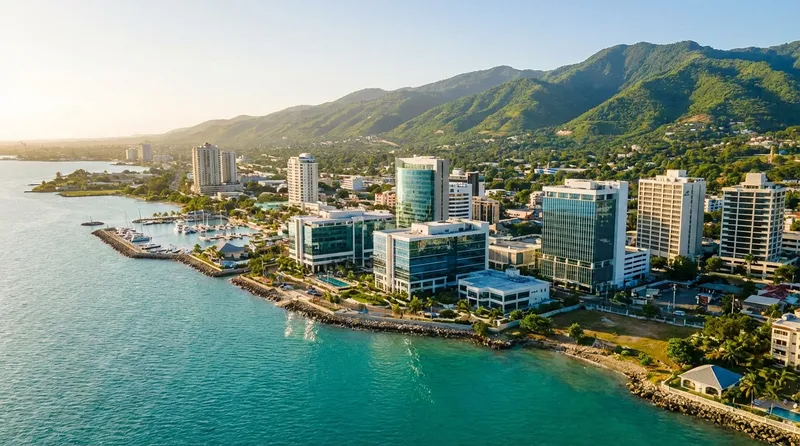
A Trinidad customer support call center delivers tier 1 and tier 2 voice, chat, email, social, and back-office support from native-English Caribbean agents at $12-18 per hour all-in. Trinidad runs on UTC-4 year-round (one hour ahead of US Eastern in winter, on the same clock during US DST), making 8am-8pm Eastern coverage easy with a single shift block. CFG ships every program with QA scorecards calibrated against your CSAT, NPS, AHT, and FCR benchmarks. Tier 3 work that requires deep engineering or licensed-specialist expertise stays with your in-house team. Most CFG Trinidad programs handle 70-85 percent of total ticket volume in Trinidad and route the remainder to client-side specialists. Pilot Month from one agent, no setup fee, seven-business-day ramp, no annual prepay.
Why outsource customer support to Trinidad?
Trinidad and Tobago is one of the more economically diversified Caribbean countries and one of the longest-running BPO destinations in the region. English is the official language. The country runs on Atlantic Standard Time (UTC-4) year-round with no daylight saving shift, which puts Trinidad one hour ahead of US Eastern in winter and on the same clock as US Eastern during US DST.
For customer support specifically:
- Native English bench. Trinidadian agents are educated in English from primary school forward and the country has a strong tertiary education sector feeding the BPO labor pool. Neutral Caribbean English carries well across US markets.
- Multichannel maturity. Trinidad operators have been running voice, chat, email, and social customer support for over a decade. CRM and helpdesk integration is a routine operating discipline, not a novelty.
- Time zone advantage. Single-shift 8am-8pm Eastern coverage with no overnight differential. Daylight saving alignment means no twice-yearly schedule adjustment.
- Tenure on tier 2. Attrition is the cost that does not appear on the rate card, and tenured agents are the ones who close a tier 2 escalation without a transfer. Live supervision during US business hours is the lever we actually control. See our call center attrition guide for what the published data does and does not support by geography.
- Cost structure. $12-18 per hour all-in versus $22-42 per hour onshore. 45 to 57 percent labor cost reduction without compromising native-English quality.
Caribbean and Central American nearshore wedge: CFG runs customer support from native-English teams on US business hours. The trade-off versus voice-only far-offshore providers is paid back in agent tenure, fewer escalations, and CSAT scores that hold up under audit. For details on cross-location capability, see our customer support service hub.
What customer support tiers does CFG handle from Trinidad?
The tier-1-versus-tier-2-versus-tier-3 line is the most important scoping decision in any customer support engagement. CFG draws it explicitly per program during onboarding.
Tier 1 (CFG Trinidad Scope)
Account servicing, password resets, billing inquiries, order status, returns processing, address changes, basic how-to questions, and standard email and chat triage. Highest ticket volume for most consumer-facing programs, macro-driven response patterns reduce average handle time.
Tier 2 (CFG Trinidad Scope)
Complex troubleshooting, multi-step technical workflows, escalation handling for unhappy customers, retention conversations, and cross-functional ticket research that requires touching multiple systems. The same 7-business-day go-live after a completed kickoff, then a longer supervised ramp and weekly calibration against client benchmarks.
Tier 3 (Stays In-House)
Deep engineering knowledge, source-code-level debugging, specialized product expertise, or domain-licensed activity (insurance binding, financial advice, legal consultation) stays with your in-house engineering, specialist staff, or licensed advisors. CFG routes via warm transfer or structured escalation tickets.
What Volume Mix to Expect
Most CFG Trinidad customer support programs handle 70-85 percent of total ticket volume in Trinidad and route the remaining 15-30 percent to client-side specialists. The exact split depends on product complexity, macro coverage, and how well documented your tier 3 escalation paths are.
Channels and helpdesk stacks
CFG Trinidad teams handle inbound and outbound voice, live chat, email, SMS, and customer-facing social channels. Voice is the largest channel by volume for most programs, but blended chat-plus-voice and social-plus-email teams are standard for SaaS, e-commerce, fintech, and DTC consumer brands.
Common Helpdesk Platforms
Zendesk, Intercom, HubSpot Service Hub, Salesforce Service Cloud, Freshdesk, Gorgias, Help Scout, and Kustomer. Custom-built integrations are also supported when client engineering teams provide stable APIs and scoped agent access. CFG does not require clients to migrate stacks; we hire agents and configure training to match the existing system.
Voice Stack
Voice campaigns run on industry-standard cloud telephony (Five9, Talkdesk, Genesys Cloud, RingCentral Contact Center, NICE CXone, and others). Recording, redaction of payment card and PHI data, and retention policies are configured per program.
Social and Async Support
Customer-facing social work (Twitter and Facebook messenger response, Instagram DMs, app-store review response, and forum moderation) is calibrated separately from voice and email because tone and response-time expectations differ. CFG QA scorecards reflect that channel difference.
How Trinidad support affects CSAT and NPS
Customer support is one of the top drivers of CSAT and NPS in subscription, e-commerce, fintech, and SaaS businesses. Customers who have a positive support interaction are materially more likely to renew, refer, and recommend than customers who have a negative one.
The structural advantages of nearshore Caribbean (native English, script certification, time zone alignment, live supervision that keeps tenured agents on tier 2 escalations) translate directly into the things customers rate on post-call surveys: ease of resolution, agent knowledge, agent tone, hold time, and first-call resolution.
CFG ships every Trinidad customer support program with QA scorecards calibrated against client CSAT and NPS benchmarks and tracks the metrics weekly with structured calibration sessions between CFG QA and client-side leads. Off-script behavior is flagged within 24 hours and triggers immediate coaching. To verify specific CSAT lift potential for your channel mix and customer base, request a written quote with a sample tier-1 KPI baseline.
What does Trinidad customer support cost in 2026?
Trinidad-based CFG customer support agents run $12-18 per hour all-in for tier 1 and tier 2 work. B2B-style commercial account work and high-touch retention runs $12-18 per hour as a premium-band program. Rates bundle agent pay, supervision, QA review and standard reporting; call recording retention comes in from the $13 Scored Desk up.
| Function | Trinidad Rate (2026) | US Equivalent |
|---|---|---|
| Tier 1 voice support | $12-18/hr | $22-35/hr |
| Tier 1 chat / email / social | $12-18/hr | $20-32/hr |
| Tier 2 troubleshooting | $12-18/hr | $28-42/hr |
| Retention / save desk | $12-18/hr | $30-48/hr |
| B2B commercial support | $12-18/hr | $30-50/hr |
For deeper pricing context, see our call center outsourcing cost guide, our cost calculator, or the pricing page.
A 10-agent Trinidad support team running 8am to 8pm Eastern at $12 to $18 per hour all-in costs $19,200 to $28,800 per month, versus $35,200 to $67,200 for the equivalent US-based team at $22 to $42 an hour (both at 10 agents x 160 hours). Factors pushing rates toward the upper end: 24/7 coverage with overnight differentials, complex multi-product helpdesk integrations, high CSAT or low-AHT SLAs. Factors pulling rates down: standard 12-hour single-shift coverage, larger team size, engagement lengths of six months or more.
Related Reading
Frequently Asked Questions
Why outsource customer support to Trinidad specifically?
Trinidad and Tobago is one of the more economically diversified Caribbean countries, with English as the official language and a well-established BPO sector concentrated around Port of Spain and the Tamana InTech Park. Trinidad runs on Atlantic Standard Time (UTC-4) year-round with no daylight saving, which puts Trinidad one hour ahead of US Eastern Time in winter and on the same clock as US Eastern in summer. For US customer support programs that need 8am-to-8pm coverage, Trinidad agents can comfortably handle Eastern, Central, and parts of Pacific business hours within standard shift blocks. Trinidad has been a regional outsourcing destination for over a decade, with operators serving US, UK, and Canadian customer support and back-office clients. The country's tertiary education system feeds a steady supply of agents into the BPO labor pool, supporting tier 2 work that requires longer training cycles than tier 1.
What customer support tiers does CFG handle from Trinidad versus keep in-house?
CFG Trinidad agents handle tier 1 customer support and most tier 2 work. Tier 1 covers account servicing, password resets, billing inquiries, order status, returns processing, address changes, and FAQ-driven inbound and outbound work. Tier 2 covers more complex troubleshooting, multi-step technical workflows, escalation handling for unhappy customers, retention and save conversations, and cross-functional ticket research. Tier 3 work that requires deep engineering knowledge, source-code-level debugging, or specialized product expertise typically stays with your in-house engineering or specialist staff and is reached via warm transfer or escalation ticket. Any state-licensed activity stays with your in-house licensed staff. Most CFG Trinidad programs handle 70 to 85 percent of total ticket volume in Trinidad and route the remainder to client-side specialists. The licensable-versus-non-licensable line and the tier-2-versus-tier-3 line are configured per program during scoping.
What channels does CFG support from Trinidad?
CFG Trinidad teams handle inbound and outbound voice, live chat, email, SMS, and customer-facing social channels (Twitter and Facebook messenger response, Instagram DMs, app-store review response, and forum moderation where applicable). Voice is the largest channel by volume for most programs, but blended chat-plus-voice and social-plus-email teams are common for SaaS, e-commerce, fintech, and DTC consumer brands. Trinidad agents are trained on whichever helpdesk and CRM stack the client uses (Zendesk, Intercom, HubSpot Service Hub, Salesforce Service Cloud, Freshdesk, Gorgias, Help Scout, and others). Custom-built helpdesk integrations are supported when client engineering teams provide stable APIs. Quality assurance scorecards are calibrated per channel because tone and response-time benchmarks differ between voice and asynchronous text. Recording, redaction of payment card and PHI data, and retention policies are configured per program to align with the client's existing compliance posture.
How does Trinidad customer support affect CSAT and NPS?
Customer support is one of the top drivers of CSAT and NPS in subscription, e-commerce, fintech, and SaaS businesses. The mechanism is intuitive: customers who have a positive support interaction are materially more likely to renew, refer, and recommend than customers who have a negative one. Trinidad native-English agents tend to deliver CSAT and NPS scores that hold up against US-based equivalents on equivalent script discipline. The structural advantages of nearshore Caribbean (native English, script certification, time zone alignment, live supervision that keeps tenured agents on tier 2 escalations) translate directly into the things customers rate on post-call surveys: ease of resolution, agent knowledge, agent tone, hold time, and first-call resolution. CFG ships every Trinidad customer support program with QA scorecards calibrated against client CSAT and NPS benchmarks and tracks the metrics weekly. To verify exact CSAT lift potential for your specific channel mix and customer base, request a written quote with a sample tier-1 KPI baseline.
What does Trinidad customer support outsourcing cost in 2026?
Trinidad-based CFG customer support agents run $12-18 per hour all-in for tier 1 and tier 2 work. B2B-style commercial account work and high-touch retention runs $12-18 per hour as a premium-band program. Rates bundle agent pay, supervision, QA review and standard reporting against your KPIs (CSAT, NPS, AHT, FCR, ticket-resolution-time, SLA compliance); call recording retention comes in from the $13 Scored Desk up. Compared to US-based equivalents at $22-42 per hour, that represents a 45 to 57 percent labor reduction. A 10-agent Trinidad support team running 8am to 8pm Eastern at $12 to $18 per hour all-in costs $19,200 to $28,800 per month, versus $35,200 to $67,200 onshore at $22 to $42 an hour (both at 10 agents x 160 hours). 24/7 coverage with overnight differentials pushes rates toward the upper end. To verify exact pricing for your channel mix, ticket volume, and coverage hours, request a written quote. The Pilot Month starts from one agent with no setup fee and no annual prepay, and any agent can be replaced within 5 business days.
Prefer a written quote?
Trinidad Customer Support with CFG
Get a custom proposal for a Trinidad-based tier 1 or tier 2 customer support team. Native-English Caribbean agents, your time zone, all-inclusive rates. Reach out through our contact page and we respond within one business day.
Faster than a form
Book a 20-minute call instead
Pick a slot that works for you. We'll walk through your support program, share what's worked for similar accounts, and tell you on the call if Trinidad is a fit. No slides.
Live 7 business days after kickoff · month-to-month · replace any agent in 5 business days